Native American Heritage Month, or as it is commonly referred to, American Indian and Alaska Native Heritage Month, had its official beginning with a 1990 landmark bill, where President George H. W. Bush honored America’s tribal people by designating November as “National American Indian Heritage Month.” (Source: Library of Congress)
The month is a time to celebrate rich and diverse cultures, traditions, and histories and to acknowledge the important contributions of Native people. Heritage Month is also an opportune time to educate the general public about tribes, to raise general awareness about the unique challenges Native people have faced both historically and in the present, and the ways in which tribal citizens have worked to conquer these challenges. (Source: National Congress of American Indians)




 Moonshot: the Indigenous Comics Collection (Volume 1)
by
MOONSHOT: The Indigenous Comics Collection brings together dozens of creators from North America to contribute comic book stories showcasing the rich heritage and identity of indigenous storytelling. From traditional stories to exciting new visions of the future, this collection presents some of the finest comic book and graphic novel work on the continent.
Moonshot: the Indigenous Comics Collection (Volume 1)
by
MOONSHOT: The Indigenous Comics Collection brings together dozens of creators from North America to contribute comic book stories showcasing the rich heritage and identity of indigenous storytelling. From traditional stories to exciting new visions of the future, this collection presents some of the finest comic book and graphic novel work on the continent.
 Tales of the mighty code talkers
by
"There has been a great deal of writing the past several decades about Native American Code Talkers of World War Two. The published works have been about Navajos and the tremendous contribution they made in the Pacific campaigns of the war. What is often overlooked is the role played in both World Wars by men of other tribes. There were Cherokee, Choctaw, Comanche, Creek and other tribal representatives with their languages involved as well.
Tales of the mighty code talkers
by
"There has been a great deal of writing the past several decades about Native American Code Talkers of World War Two. The published works have been about Navajos and the tremendous contribution they made in the Pacific campaigns of the war. What is often overlooked is the role played in both World Wars by men of other tribes. There were Cherokee, Choctaw, Comanche, Creek and other tribal representatives with their languages involved as well.
 Super Indian Volume Two
by
"Hubert Logan was an ordinary Reservation Boy until he ate tainted commodity cheese infused with 'Rezium, ' a secret government food enrichment additive. Known as 'Super Indian, ' Hubert fights evil forces who would overtake the Reservation's resources and population. Assisted by his trusty sidekicks Mega Bear and Diogi, they fight crime the way they know how -- with strength, smarts and humor."-
Super Indian Volume Two
by
"Hubert Logan was an ordinary Reservation Boy until he ate tainted commodity cheese infused with 'Rezium, ' a secret government food enrichment additive. Known as 'Super Indian, ' Hubert fights evil forces who would overtake the Reservation's resources and population. Assisted by his trusty sidekicks Mega Bear and Diogi, they fight crime the way they know how -- with strength, smarts and humor."-
 Three Feathers
by
Explores the power and grace of restorative justice in one Northern community and the cultural legacy that can empower future generations.
Three Feathers
by
Explores the power and grace of restorative justice in one Northern community and the cultural legacy that can empower future generations.
 Sovereign Traces
by
Volume 1 merges work of contemporary North American Indian literature with imaginative illustrations by U.S. and Canadian artists to provide a unique collection of reimagined fiction and poetry. Volume 2 provides a unique opportunity for audiences to hear from a myriad of American Indian and First Nations voices on the meaning of love. Here readers will find works of graphic literature, including both poetry and fiction, that explore how celestial bodies build and share creative intimacie
Sovereign Traces
by
Volume 1 merges work of contemporary North American Indian literature with imaginative illustrations by U.S. and Canadian artists to provide a unique collection of reimagined fiction and poetry. Volume 2 provides a unique opportunity for audiences to hear from a myriad of American Indian and First Nations voices on the meaning of love. Here readers will find works of graphic literature, including both poetry and fiction, that explore how celestial bodies build and share creative intimacie
 A Blanket of Butterflies
by
"A Blanket of Butterflies explores the journey of Shinobu, a mysterious stranger who visits Fort Smith, NWT, to retrieve his family's samurai suit of armor and sword from the local museum. When he discovers that his grandfather's sword has been lost in a poker game to the man they call "Benny the Bank," he sets out to retrieve it with the help of a young boy, Sonny, and his grandmother. Together, they face Benny and his men, Torchy, Sfen and the giant known as Flinch, and come to an unexpected realization. This graphic novel, beautifully illustrated by Scott B. Henderson, explores the grace of family and of trusting the power of the spirit world."
A Blanket of Butterflies
by
"A Blanket of Butterflies explores the journey of Shinobu, a mysterious stranger who visits Fort Smith, NWT, to retrieve his family's samurai suit of armor and sword from the local museum. When he discovers that his grandfather's sword has been lost in a poker game to the man they call "Benny the Bank," he sets out to retrieve it with the help of a young boy, Sonny, and his grandmother. Together, they face Benny and his men, Torchy, Sfen and the giant known as Flinch, and come to an unexpected realization. This graphic novel, beautifully illustrated by Scott B. Henderson, explores the grace of family and of trusting the power of the spirit world."
 The Marrow Thieves
by
"In a future world ravaged by global warming, people have lost the ability to dream, and the dreamlessness has led to widespread madness. The only people still able to dream are North America's indigenous population - and it is their marrow that holds the cure for the rest of the world. But getting the marrow - and dreams - means death for the unwilling donors. Driven to flight, a 15-year-old and his companions struggle for survival, attempt to reunite with loved ones, and take refuge from the "recruiters" who seek them out to bring them to the marrow-stealing 'factories.'"--
The Marrow Thieves
by
"In a future world ravaged by global warming, people have lost the ability to dream, and the dreamlessness has led to widespread madness. The only people still able to dream are North America's indigenous population - and it is their marrow that holds the cure for the rest of the world. But getting the marrow - and dreams - means death for the unwilling donors. Driven to flight, a 15-year-old and his companions struggle for survival, attempt to reunite with loved ones, and take refuge from the "recruiters" who seek them out to bring them to the marrow-stealing 'factories.'"--
 The Night Watchman
by
"It is 1953. Thomas Wazhushk is the night watchman at the first factory to open near the Turtle Mountain Reservation in rural North Dakota. He is also a prominent Chippewa Council member, trying to understand a new bill that is soon to be put before Congress. The US Government calls it an 'emancipation' bill; but it isn't about freedom - it threatens the rights of Native Americans to their land, their very identity. How can he fight this betrayal? Unlike most of the girls on the reservation, Pixie - 'Patrice' - Paranteau has no desire to wear herself down on a husband and kids. She works at the factory, earning barely enough to support her mother and brother, let alone her alcoholic father who sometimes returns home to bully her for money. But Patrice needs every penny to get if she's ever going to get to Minnesota to find her missing sister Vera."
The Night Watchman
by
"It is 1953. Thomas Wazhushk is the night watchman at the first factory to open near the Turtle Mountain Reservation in rural North Dakota. He is also a prominent Chippewa Council member, trying to understand a new bill that is soon to be put before Congress. The US Government calls it an 'emancipation' bill; but it isn't about freedom - it threatens the rights of Native Americans to their land, their very identity. How can he fight this betrayal? Unlike most of the girls on the reservation, Pixie - 'Patrice' - Paranteau has no desire to wear herself down on a husband and kids. She works at the factory, earning barely enough to support her mother and brother, let alone her alcoholic father who sometimes returns home to bully her for money. But Patrice needs every penny to get if she's ever going to get to Minnesota to find her missing sister Vera."
 Poet Warrior
by
"Poet Laureate Joy Harjo offers a vivid, lyrical, and inspiring call for love and justice in this contemplation of her trailblazing life. In the second memoir from the first Native American to serve as US poet laureate, Joy Harjo invites us to travel along the heartaches, losses, and humble realizations of her "poet-warrior" road. A musical, kaleidoscopic meditation, Poet Warrior reveals how Harjo came to write poetry of compassion and healing, poetry with the power to unearth the truth and demand justice. Weaving together the voices that shaped her, Harjo listens to stories of ancestors and family, the poetry and music that she first encountered as a child, the teachings of a changing earth, and the poets who paved her way. She explores her grief at the loss of her mother and sheds light on the rituals that nourish her as an artist, mother, wife, and community member. Moving fluidly among prose, song, and poetry, Poet Warrior is a luminous journey of becoming that sings with all the jazz, blues, tenderness, and bravery that we know as distinctly Joy Harjo"
There There
by
Through his large cast of interwoven characters, Orange explores a wide range of experiences among Indigenous peoples living in the United States in this PEN/Hemingway Award–winning novel.
Poet Warrior
by
"Poet Laureate Joy Harjo offers a vivid, lyrical, and inspiring call for love and justice in this contemplation of her trailblazing life. In the second memoir from the first Native American to serve as US poet laureate, Joy Harjo invites us to travel along the heartaches, losses, and humble realizations of her "poet-warrior" road. A musical, kaleidoscopic meditation, Poet Warrior reveals how Harjo came to write poetry of compassion and healing, poetry with the power to unearth the truth and demand justice. Weaving together the voices that shaped her, Harjo listens to stories of ancestors and family, the poetry and music that she first encountered as a child, the teachings of a changing earth, and the poets who paved her way. She explores her grief at the loss of her mother and sheds light on the rituals that nourish her as an artist, mother, wife, and community member. Moving fluidly among prose, song, and poetry, Poet Warrior is a luminous journey of becoming that sings with all the jazz, blues, tenderness, and bravery that we know as distinctly Joy Harjo"
There There
by
Through his large cast of interwoven characters, Orange explores a wide range of experiences among Indigenous peoples living in the United States in this PEN/Hemingway Award–winning novel.
 The Earth Always Endures
by
The Earth Always Endures
by
 Changing Is Not Vanishing
by
Through extensive archival research in small-circulation newspapers and magazines, manuscripts, pamphlets, rare books, and scrapbooks, Robert Dale Parker has uncovered the work of more than 140 early Indian poets who wrote before 1930.
Changing Is Not Vanishing
by
Through extensive archival research in small-circulation newspapers and magazines, manuscripts, pamphlets, rare books, and scrapbooks, Robert Dale Parker has uncovered the work of more than 140 early Indian poets who wrote before 1930.
 Shedding Skins
by
Here's the myth: Native Americans are people of great spiritual depth, in touch with the rhythms of the earth, rhythms that they celebrate through drumming and dancing. They love the great outdoors and are completely in tune with the natural world. They can predict the weather by glancing at the sky, or hearing a crow cry, or somehow. Who knows exactly how? The point of the myth is that Indians are, well, special. Different from white people, but in a good way.The four young male Native American poets whose work is brought together in this startling collection would probably raise high their middle fingers in salute to this myth. These guys and "guys" they are-don't buy into the myth. Their poems aren't about hunting and fishing or bonding with animal spirits. Their poems are about urban decay and homelessness, about loneliness and despair, about Payday Loans and 40-ounce beers, about getting enough to eat and too much to drink. And there is nothing romantic about their poetry, either. It is written in the vernacular of mean streets: often raw and coarse and vulgar, just like the lives it describes. Sure, they write about life on the reservation. However, for the Indians in their poems, life on the reservation is a lot like life in the city, but without the traffic. These poets are sick to death of the myth. You can feel it in their poems.These poets are bound by a common attitude as well as a common heritage. All four-Joel Waters, Steve Pacheco, Luke Warm Water, and Trevino L. Brings Plenty-are Sioux, and all four identify themselves as "Skins" (as in "Redskins"). In their poems, they grapple with their heritage, wrestling with what it means to be a Sioux and a Skin today. It's a fight to the finish.
Shedding Skins
by
Here's the myth: Native Americans are people of great spiritual depth, in touch with the rhythms of the earth, rhythms that they celebrate through drumming and dancing. They love the great outdoors and are completely in tune with the natural world. They can predict the weather by glancing at the sky, or hearing a crow cry, or somehow. Who knows exactly how? The point of the myth is that Indians are, well, special. Different from white people, but in a good way.The four young male Native American poets whose work is brought together in this startling collection would probably raise high their middle fingers in salute to this myth. These guys and "guys" they are-don't buy into the myth. Their poems aren't about hunting and fishing or bonding with animal spirits. Their poems are about urban decay and homelessness, about loneliness and despair, about Payday Loans and 40-ounce beers, about getting enough to eat and too much to drink. And there is nothing romantic about their poetry, either. It is written in the vernacular of mean streets: often raw and coarse and vulgar, just like the lives it describes. Sure, they write about life on the reservation. However, for the Indians in their poems, life on the reservation is a lot like life in the city, but without the traffic. These poets are sick to death of the myth. You can feel it in their poems.These poets are bound by a common attitude as well as a common heritage. All four-Joel Waters, Steve Pacheco, Luke Warm Water, and Trevino L. Brings Plenty-are Sioux, and all four identify themselves as "Skins" (as in "Redskins"). In their poems, they grapple with their heritage, wrestling with what it means to be a Sioux and a Skin today. It's a fight to the finish.
 Sing with the Heart of a Bear
by
Examining contemporary poetry by way of ethnicity and gender, Kenneth Lincoln tracks the Renaissance invention of the Wild Man and the recurrent Adamic myth of the lost Garden. He discusses the first anthology of American Indian verse, The Path on the Rainbow (1918), which opened Jorge Luis Borges' university surveys of American literature, to thirty-five contemporary Indian poets who speak to, with, and against American mainstream bards. From Whitman's free verse, through the Greenwich Village Renaissance (sandwiched between the world wars) and the post-apocalyptic Beat incantations, to transglobal questions of tribe and verse at the century's close, Lincoln shows where we mine the mother lode of New World voices, what distinguishes American verse, which tales our poets sing and what inflections we hear in the rhythms, pitches, and parsings of native lines. Lincoln presents the Lakota concept of "singing with the heart of a bear" as poetry which moves through an artist. He argues for a fusion of estranged cultures, tribal and émigré, margin and mainstream, in detailing the ethnopoetics of Native American translation and the growing modernist concern for a "native" sense of the "makings" of American verse. This fascinating work represents a major new effort in understanding American and Native American literature, spirituality, and culture. Examining contemporary poetry by way of ethnicity and gender, Kenneth Lincoln tracks the Renaissance invention of the Wild Man and the recurrent Adamic myth of the lost Garden. He discusses the first anthology of American Indian verse, The Path on the
Sing with the Heart of a Bear
by
Examining contemporary poetry by way of ethnicity and gender, Kenneth Lincoln tracks the Renaissance invention of the Wild Man and the recurrent Adamic myth of the lost Garden. He discusses the first anthology of American Indian verse, The Path on the Rainbow (1918), which opened Jorge Luis Borges' university surveys of American literature, to thirty-five contemporary Indian poets who speak to, with, and against American mainstream bards. From Whitman's free verse, through the Greenwich Village Renaissance (sandwiched between the world wars) and the post-apocalyptic Beat incantations, to transglobal questions of tribe and verse at the century's close, Lincoln shows where we mine the mother lode of New World voices, what distinguishes American verse, which tales our poets sing and what inflections we hear in the rhythms, pitches, and parsings of native lines. Lincoln presents the Lakota concept of "singing with the heart of a bear" as poetry which moves through an artist. He argues for a fusion of estranged cultures, tribal and émigré, margin and mainstream, in detailing the ethnopoetics of Native American translation and the growing modernist concern for a "native" sense of the "makings" of American verse. This fascinating work represents a major new effort in understanding American and Native American literature, spirituality, and culture. Examining contemporary poetry by way of ethnicity and gender, Kenneth Lincoln tracks the Renaissance invention of the Wild Man and the recurrent Adamic myth of the lost Garden. He discusses the first anthology of American Indian verse, The Path on the
 Kiyam
by
kiyâm contemplates language loss and recovery in the twenty-first century, by relating one woman's journey in learning an Indigenous language.
Kiyam
by
kiyâm contemplates language loss and recovery in the twenty-first century, by relating one woman's journey in learning an Indigenous language.
 What I've Stolen, What I've Earned
by
What I've Stolen, What I've Earned
by
 In the Belly of a Laughing God
by
In the Belly of a Laughing Godexamines how eight contemporary Native women poets in Canada and the United States employ humour and irony to address the intricacies of race, gender, and nationality.
In the Belly of a Laughing God
by
In the Belly of a Laughing Godexamines how eight contemporary Native women poets in Canada and the United States employ humour and irony to address the intricacies of race, gender, and nationality.
 Earth speaks : Native Americans speak about the Earth.
by
Earth Speaks is a short documentary about the Earth as Mother and the impacts of oil and gas drilling on Native American tribal lands in the United States, particularly the Blackfeet Reservation in North Central Montana. Outside entities promise economic wealth and prosperity to territories whose unemployment rate hovers at 70%. Exploitation of people, land, and resources is not new to the Native American. How does seeing the Earth with a 'spiritual eye' affect the oil and gas industry of Native Lands? Is there a connection between those views and others that are more pragmatic, and what alternative is there for a world dependent on fossil fuels?
Earth speaks : Native Americans speak about the Earth.
by
Earth Speaks is a short documentary about the Earth as Mother and the impacts of oil and gas drilling on Native American tribal lands in the United States, particularly the Blackfeet Reservation in North Central Montana. Outside entities promise economic wealth and prosperity to territories whose unemployment rate hovers at 70%. Exploitation of people, land, and resources is not new to the Native American. How does seeing the Earth with a 'spiritual eye' affect the oil and gas industry of Native Lands? Is there a connection between those views and others that are more pragmatic, and what alternative is there for a world dependent on fossil fuels?
 Circle of stories : Native American stories from the four directions
by
This unique and engaging documentary explores the extraordinary diversity and profound contemporary relevance of Native American storytelling. A feast for the eyes, ears, and mind, the film presents eight varied stories from the four directions and seasons.
Circle of stories : Native American stories from the four directions
by
This unique and engaging documentary explores the extraordinary diversity and profound contemporary relevance of Native American storytelling. A feast for the eyes, ears, and mind, the film presents eight varied stories from the four directions and seasons.
 Ishi : the last Yahi
by
In 1492, there were more than ten million Native Americans in North America. By 1910, their numbers had been reduced to fewer than 300,000. In California, massacres of Indians in the 1860s and 1870s had nearly exterminated the Native peoples in the state. Therefore the sudden appearance in northern California in 1911 of Ishi, "the last wild Indian in North America," stunned the nation. For more than 40 years, Ishi had lived in hiding with a tiny band of survivors. When he walked into the white man's world, he was the last Yahi Indian alive. For young anthropologist Alfred Kroeber, Ishi's appearance was a windfall. Kroeber had been searching for years to find "wild, uncontaminated Indians" who could document their traditional way of life. Through Kroeber's invitation, Ishi left a jail cell and lived out the remaining four years of his life as an informant and teacher at the Museum of Anthropology in San Francisco. Ishi dedicated those years to relating Yahi stories and demonstrating the traditional way of life he knew so well.
Ishi : the last Yahi
by
In 1492, there were more than ten million Native Americans in North America. By 1910, their numbers had been reduced to fewer than 300,000. In California, massacres of Indians in the 1860s and 1870s had nearly exterminated the Native peoples in the state. Therefore the sudden appearance in northern California in 1911 of Ishi, "the last wild Indian in North America," stunned the nation. For more than 40 years, Ishi had lived in hiding with a tiny band of survivors. When he walked into the white man's world, he was the last Yahi Indian alive. For young anthropologist Alfred Kroeber, Ishi's appearance was a windfall. Kroeber had been searching for years to find "wild, uncontaminated Indians" who could document their traditional way of life. Through Kroeber's invitation, Ishi left a jail cell and lived out the remaining four years of his life as an informant and teacher at the Museum of Anthropology in San Francisco. Ishi dedicated those years to relating Yahi stories and demonstrating the traditional way of life he knew so well.
 Our Fires Still Burn : The Native American Experience.
by
This exciting and compelling one hour documentary invites viewers into the lives of contemporary Native American role models living in the U.S. Midwest. It dispels the myth that American Indians have disappeared from the American horizon, and reveals how they continue to persist, heal from the past, confront the challenges of today, keep their culture alive, and make great contributions to society. Their experiences will deeply touch both Natives and non-Natives and help build bridges of understanding, respect, and communication. The tragic history of Native Americans is considered by many to be our "American Holocaust."
Our Fires Still Burn : The Native American Experience.
by
This exciting and compelling one hour documentary invites viewers into the lives of contemporary Native American role models living in the U.S. Midwest. It dispels the myth that American Indians have disappeared from the American horizon, and reveals how they continue to persist, heal from the past, confront the challenges of today, keep their culture alive, and make great contributions to society. Their experiences will deeply touch both Natives and non-Natives and help build bridges of understanding, respect, and communication. The tragic history of Native Americans is considered by many to be our "American Holocaust."
 Science or Sacrilege: Native Americans, Archaeology and the Law
by
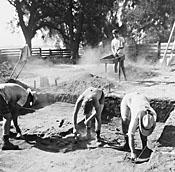
Well into the 20th century, Native American physical remains were frequently harvested like trophies, and ritual objects and artwork often reached museums under questionable circumstances. Such glaring offenses of "œimperial archaeology" ultimately motivated Congress to pass the Native American Graves Protection and Repatriation Act (NAGPRA) in 1990.This provocative, in-depth documentary examines the Act's underlying moral and political issues, its practical consequences, and the prospects for science in the post-NAGPRA world.
Science or Sacrilege: Native Americans, Archaeology and the Law
by
Well into the 20th century, Native American physical remains were frequently harvested like trophies, and ritual objects and artwork often reached museums under questionable circumstances. Such glaring offenses of "œimperial archaeology" ultimately motivated Congress to pass the Native American Graves Protection and Repatriation Act (NAGPRA) in 1990.This provocative, in-depth documentary examines the Act's underlying moral and political issues, its practical consequences, and the prospects for science in the post-NAGPRA world.
 Language Healers - Native Americans Revitalizing Native Languages
by
Heenetiineyoo3eihiiho' (Language Healers) is a documentary that tells the story of Native Americans who are striving to revitalize their languages. From Alaska to Oklahoma and Wisconsin to Montana, we witness stories about the importance of saving Native American languages and meet some of the people who are working hard to heal these national treasures.
Language Healers - Native Americans Revitalizing Native Languages
by
Heenetiineyoo3eihiiho' (Language Healers) is a documentary that tells the story of Native Americans who are striving to revitalize their languages. From Alaska to Oklahoma and Wisconsin to Montana, we witness stories about the importance of saving Native American languages and meet some of the people who are working hard to heal these national treasures.


