One of the best ways to discover the perfect source for your topic is to browse the library stacks by call number range. Each call number range represents a particular subject and all of the books on a particular topic will be located in the same general area on the shelves. So if you want a book on Latin American literature, go to the call number range beginning with PQ7081 to see what we have!

Welcome to the research guide for SPAN 405: Critical Methods!
Please reach out at any point in time if you need assistance with research! Schedule an appointment here.
Tori Golden, tgolden2@luc.edu
Critical methods means the different ways scholars analyze, interpret, and research works of Spanish literature. Instead of just asking what happens in a text, critical methods ask how we can understand it through different perspectives.
Theoretical approaches: Critics might look at a novel or poem through the lens of history, gender, politics, or psychoanalysis. For example, a Marxist critic might focus on class struggle in Lorca’s plays, while a feminist critic might examine how Carmen Laforet portrays women’s roles in Nada.
Research strategies: Scholars use advanced tools to locate and analyze texts—such as specialized databases (MLA International Bibliography, Dialnet), digital archives (Biblioteca Virtual Miguel de Cervantes), or rare book collections. They also track how other scholars have debated and interpreted the same works over time.
Why it matters: Critical methods help you enter scholarly conversations, develop original arguments, and situate your own interpretations within broader debates about Spanish literature.
In other words, critical methods give you both the lenses to read literature more deeply and the research practices to study it as a scholar.
The library catalog is a great place to start your research. Here are some tips to make searching more effective:
How is exile represented in post-Civil War Spanish poetry?
Break down your research question into main ideas:
Exile
Spanish Civil War / Postwar Spain
Poetry / Literature
Think across languages (English + Spanish) and disciplinary vocabulary:
Exile: exile, diaspora, banishment / exilio, destierro
Spanish Civil War / Postwar Spain: Spanish Civil War, Franco era, postwar Spain / Guerra Civil Española, franquismo, posguerra
Poetry: poetry, poets, literature / poesía, poetas, literatura
Use Boolean operators (AND, OR) and quotation marks (“ ”) to combine your terms.
Try your searches in different databases (MLA, JSTOR, Dialnet, Cervantes Virtual).
Compare results: Does searching in Spanish give you more literary criticism? Does English yield more historical context?
Look for new keywords or authors’ names in the articles you find and add them to your search.
'Citation Tracing' (also known as 'Citation Tracking') refers to both finding references cited in a given article and finding newer articles that cite the original article.
Think about whether you need to go back in time or forward in time. Ask:
This allows you to follow research-as-a-conversation through time--cited references are past research, while citing works are more recent (relative to the article you already know about.)
Finding Citing Works in Google Scholar
In the Results list of Google Scholar, below the entry for each result that has been cited, will be a 'Cited by [number]' link. The [number] is how many other entries Google Scholar has found that cite that work. Some of these may be duplicates. Click the link to see a list of citing works.
If there is no 'Cited by' link, then Google Scholar has not found any citing works. That does not mean it hasn't been cited, just that GS doesn't have records.
Note: pay attention to dates. Extremely new articles will have few if any 'Cited by' works, just because no one has had time to publish anything newer. Classic and high impact works may have hundreds (even thousands) of 'Cited by' works.
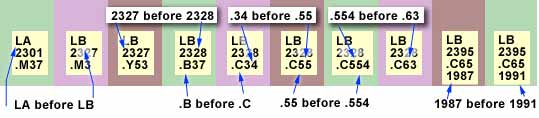
How To Read Call Numbers
This is an explanation of how books with Library of Congress call numbers are sorted. This gives a better understanding of Library of Congress shelving.
Primary sources are the original texts or cultural materials you are studying. These come directly from the time period or author you’re researching.
Examples:
Novels, poems, plays, short stories (Lorca’s Romancero gitano, Laforet’s Nada, Cernuda’s Las nubes)
Letters, diaries, exile journals, manifestos, political speeches
First editions, manuscripts, archival materials
Newspapers, magazines, pamphlets from the Civil War or Franco era
Posters, photographs, performances, film adaptations
Secondary sources are scholarly works that analyze, interpret, or critique primary sources. These put the original works into context or apply a theoretical framework.
Examples:
Peer-reviewed journal articles on Lorca, Cernuda, or Laforet
Book chapters analyzing exile in postwar poetry
Edited collections applying feminist, psychoanalytic, or Marxist criticism to Spanish literature
Biographies or critical companions to Spanish authors
Primary sources = the texts you interpret.
Secondary sources = how other scholars have interpreted those texts.
In your assignments, you’ll usually combine both: analyzing a primary text while engaging with existing scholarship to situate your argument in the critical conversation.

 The Cambridge Companion to the Latin American Novel
by
The diverse countries of Latin America have produced a lively and ever evolving tradition of novels, many of which are read in translation all over the world. This Companion offers a broad overview of the novel's history and analyses in depth several representative works by, for example, Gabriel García Márquez, Machado de Assis, Isabel Allende and Mario Vargas Llosa. The essays collected here offer several entryways into the understanding and appreciation of the Latin American novel in Spanish-speaking America and Brazil. The volume conveys a real sense of the heterogeneity of Latin American literature, highlighting regions whose cultural and geopolitical particularities are often overlooked. Indispensable to students of Latin American or Hispanic studies and those interested in comparative literature and the development of the novel as genre, the Companion features a comprehensive bibliography and chronology and concludes with an essay about the success of Latin American novels in translation.
The Cambridge Companion to the Latin American Novel
by
The diverse countries of Latin America have produced a lively and ever evolving tradition of novels, many of which are read in translation all over the world. This Companion offers a broad overview of the novel's history and analyses in depth several representative works by, for example, Gabriel García Márquez, Machado de Assis, Isabel Allende and Mario Vargas Llosa. The essays collected here offer several entryways into the understanding and appreciation of the Latin American novel in Spanish-speaking America and Brazil. The volume conveys a real sense of the heterogeneity of Latin American literature, highlighting regions whose cultural and geopolitical particularities are often overlooked. Indispensable to students of Latin American or Hispanic studies and those interested in comparative literature and the development of the novel as genre, the Companion features a comprehensive bibliography and chronology and concludes with an essay about the success of Latin American novels in translation.
 Women Writers in Twentieth-Century Spain and Spanish America
by
Among the contributers are Clara Janes, Each study suggests detailed readings of selected texts. Some of the writers discussed are recognized as key figures in the Hispanic canon (Carmen Laforet, Rosario Castellanos, Carmen Conde, Merce Rodoreda, Juana de Ibarbourou). Others are less well-known (Maria Luisa Bombal, Idea Vilarino, Dora Alonso, Gioconda Belli, Julie Sopetran, Tina Diaz) but important to an understanding of women as producers of textual meaning. Among the contributers are Clara Janes, Monserrat Ordonez and Mirta Yanez. What emerges are the multiple subversive strategies used by women writing in Spanish and Catalan to enable self-representation and to challenge hegemonic discourse.
Women Writers in Twentieth-Century Spain and Spanish America
by
Among the contributers are Clara Janes, Each study suggests detailed readings of selected texts. Some of the writers discussed are recognized as key figures in the Hispanic canon (Carmen Laforet, Rosario Castellanos, Carmen Conde, Merce Rodoreda, Juana de Ibarbourou). Others are less well-known (Maria Luisa Bombal, Idea Vilarino, Dora Alonso, Gioconda Belli, Julie Sopetran, Tina Diaz) but important to an understanding of women as producers of textual meaning. Among the contributers are Clara Janes, Monserrat Ordonez and Mirta Yanez. What emerges are the multiple subversive strategies used by women writing in Spanish and Catalan to enable self-representation and to challenge hegemonic discourse.
 Engaging the emotions in Spanish culture and history
by
"Rather than being properties of the individual self, emotions are socially produced and deployed in specific cultural contexts, as this collection documents with unusual richness. All the essays show emotions to be a form of thought and knowledge, and a major component of social life--including in the nineteenth century, which attempted to relegate them to a feminine intimate sphere. The collection ranges across topics such as eighteenth-century sensibility, nineteenth-century concerns with the transmission of emotions, early twentieth-century cinematic affect, and the contemporary mobilization of political emotions including those regarding nonstate national identities. The complexities and effects of emotions are explored in a variety of forms--political rhetoric, literature, personal letters, medical writing, cinema, graphic art, soap opera, journalism, popular music, digital media--with attention paid to broader European and transatlantic implications"
Engaging the emotions in Spanish culture and history
by
"Rather than being properties of the individual self, emotions are socially produced and deployed in specific cultural contexts, as this collection documents with unusual richness. All the essays show emotions to be a form of thought and knowledge, and a major component of social life--including in the nineteenth century, which attempted to relegate them to a feminine intimate sphere. The collection ranges across topics such as eighteenth-century sensibility, nineteenth-century concerns with the transmission of emotions, early twentieth-century cinematic affect, and the contemporary mobilization of political emotions including those regarding nonstate national identities. The complexities and effects of emotions are explored in a variety of forms--political rhetoric, literature, personal letters, medical writing, cinema, graphic art, soap opera, journalism, popular music, digital media--with attention paid to broader European and transatlantic implications"
 Spanish culture from Romanticism to the present : structures of feeling
by
Spanish culture from Romanticism to the present : structures of feeling
by
 Disability Studies and Spanish Culture
by
An Open Access edition of this book is available on the Liverpool University Press website and the OAPEN library. Disability Studies and Spanish Culture is the first book to apply the tenets of Disability Studies to the Spanish context. In particular, this work is an important corrective to existing cultural studies of disability in Spain that tend to largely ignore intellectual disabilities. Taking on the representation of Down syndrome, autism, alexia/agnosia as well as childhood disability, its chapters combine close readings of a number of Spanish cultural products (films, novels, the comic/graphic novel and the public exhibition) with a broader socio-cultural take on the state of disability in Spain. Fraser is just as comfortable with the work of disability theorists who advocate a social model of disability (such as Lennard J. Davis, Licia Carlson, Eva Feder Kittay, David T. Mitchell, Sharon L. Snyder and more) as he is with the analysis of film and literature in the Spanish context. While researchers and students of cinema will be particularly interested in the book's detailed analyses of the formal aspects of the films, comics, and novels discussed, readers from backgrounds in history, political science and sociology will all be able to appreciate discussions of contemporary legislation, advocacy groups, cultural perceptions, models of social integration and more. The book is directed, also, toward those readers more familiar with the growing field of Disability Studies itself--making the argument that the specific case of Spanish culture and society speaks to shifts in the social attitudes and theoretical understandings of disability more broadly considered.
Disability Studies and Spanish Culture
by
An Open Access edition of this book is available on the Liverpool University Press website and the OAPEN library. Disability Studies and Spanish Culture is the first book to apply the tenets of Disability Studies to the Spanish context. In particular, this work is an important corrective to existing cultural studies of disability in Spain that tend to largely ignore intellectual disabilities. Taking on the representation of Down syndrome, autism, alexia/agnosia as well as childhood disability, its chapters combine close readings of a number of Spanish cultural products (films, novels, the comic/graphic novel and the public exhibition) with a broader socio-cultural take on the state of disability in Spain. Fraser is just as comfortable with the work of disability theorists who advocate a social model of disability (such as Lennard J. Davis, Licia Carlson, Eva Feder Kittay, David T. Mitchell, Sharon L. Snyder and more) as he is with the analysis of film and literature in the Spanish context. While researchers and students of cinema will be particularly interested in the book's detailed analyses of the formal aspects of the films, comics, and novels discussed, readers from backgrounds in history, political science and sociology will all be able to appreciate discussions of contemporary legislation, advocacy groups, cultural perceptions, models of social integration and more. The book is directed, also, toward those readers more familiar with the growing field of Disability Studies itself--making the argument that the specific case of Spanish culture and society speaks to shifts in the social attitudes and theoretical understandings of disability more broadly considered.
 Gender and Violence in Spanish Culture
by
For the true exercise of citizenship to occur, gender violence must be eradicated, as it is not an interpersonal problem, but an attack on the very concept of democracy. Despite increasing social awareness and legal measures taken to fight gender violence, it is still prevalent worldwide. Even in a country such as Spain, praised in the UN Handbook for Legislation on Violence Against Women (2010) for its advanced approach on gender violence, the legal framework has proved insufficient and deeper sociocultural changes are needed. This book presents, in this respect, groundbreaking investigations in the realm of politics, activism, and cultural production that offer both a complex picture of the agents involved in its transformation and a nuanced panorama of initiatives that subvert the normative framework of recognition of victims of gender violence. As a result, the book chapters articulate a construction of the victim as a subject that reflects and acts upon his/her experience and vulnerability, and also adopt perspectives that frame accountability within the representational tradition, the community, and the state.
Gender and Violence in Spanish Culture
by
For the true exercise of citizenship to occur, gender violence must be eradicated, as it is not an interpersonal problem, but an attack on the very concept of democracy. Despite increasing social awareness and legal measures taken to fight gender violence, it is still prevalent worldwide. Even in a country such as Spain, praised in the UN Handbook for Legislation on Violence Against Women (2010) for its advanced approach on gender violence, the legal framework has proved insufficient and deeper sociocultural changes are needed. This book presents, in this respect, groundbreaking investigations in the realm of politics, activism, and cultural production that offer both a complex picture of the agents involved in its transformation and a nuanced panorama of initiatives that subvert the normative framework of recognition of victims of gender violence. As a result, the book chapters articulate a construction of the victim as a subject that reflects and acts upon his/her experience and vulnerability, and also adopt perspectives that frame accountability within the representational tradition, the community, and the state.


